
Materials · 8 min read
Composite vs Hardwood Decking: Pros, Cons and Costs
Composite reduces some maintenance, but it is not maintenance-free. Hardwood offers real timber character, with a different care commitment.
Written by Elliot, carpenter and owner of Fine Design Co
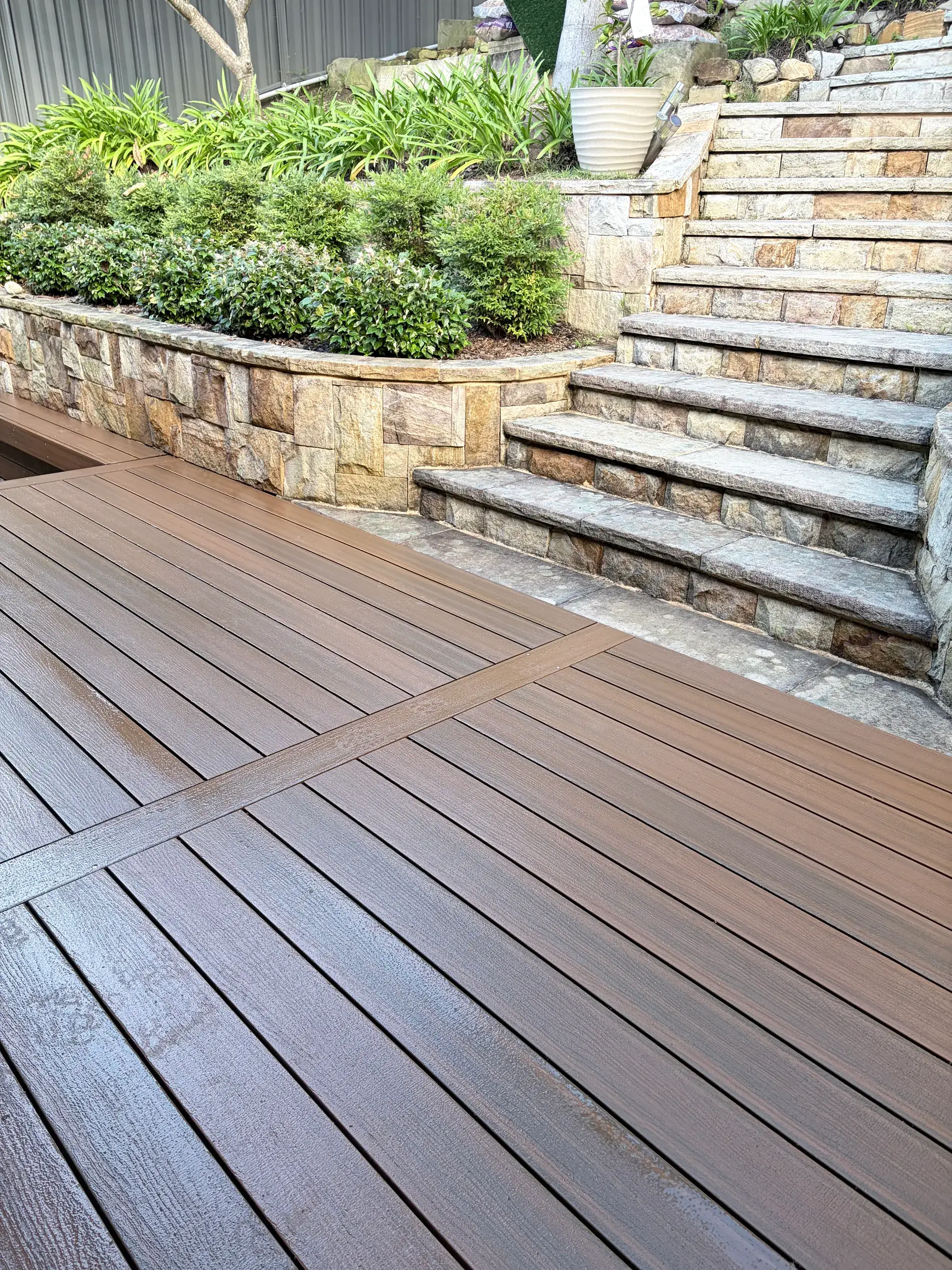
The useful question in timber vs composite decking is not which material wins on paper. It is which compromises you are comfortable living with. Some owners enjoy the variation of hardwood and do not mind maintaining a coating. Others would rather wash a manufactured surface and accept its particular look, heat performance and installation rules.
We build with both. Our job is to explain the complete system, from the supporting frame to the edge finish, rather than sell one board as the answer to every backyard. A deck beside a shaded garden and an exposed platform outside a west-facing living room can call for different priorities even when the owners have a similar budget.
What are you actually comparing?
Hardwood decking is solid timber, with grain and colour that vary naturally between boards. Species, grade, moisture condition and finishing system affect its appearance and behaviour. If that is your preferred direction, our hardwood decking service covers the broader design discussion, not just the selection of a board colour.
Composite decking is a category, not a single material specification. Many products combine wood fibres with polymers, and some have a protective cap; formulations, profiles and surface finishes differ. Installation systems vary too. Our composite decking service starts with the actual product documentation rather than assuming all manufactured boards perform alike.
| Question | Hardwood | Composite |
|---|---|---|
| Appearance | Natural grain and colour variation; changes with exposure. | More controlled appearance; repeat patterns and colour ranges vary. |
| Care | Cleaning, inspection and coating maintenance if retaining colour. | Cleaning and inspection; usually no routine timber oiling. |
| Heat | Can become hot in direct sun. | Can become hot in direct sun; assess the actual product and colour. |
| Movement | Responds to moisture and exposure. | Thermal movement and product-specific clearances matter. |
| Repair | Some marks may be sanded or refinished where appropriate. | Surface damage may require board replacement; check guidance. |
| Supporting frame | Designed for the board, loads and site. | Must meet the selected system’s support and fixing rules. |
Look at the whole deck, not a sample square
Hardwood has an irregularity that is difficult to reproduce. Grain, small colour changes and the way light catches the surface make it feel like timber because it is timber. That character also means you cannot specify every board to match a small sample. Some owners love that; others find the variation busier than they expected.
Composite can create a more consistent finish, though moulded grain patterns may repeat. On a large open deck, repeated patterns, butt joints and border details are more noticeable than they are on a sample rack. Look at a larger display if possible. Consider how the chosen colour works against doors, masonry and garden surfaces rather than selecting it in isolation.
Edges and transitions change the result
A picture-frame border, fascia detail or stair nosing can make a deck look resolved, but those details add framing, material and labour. With composite, the system may need particular edge boards or trims. With hardwood, exposed ends and coating continuity need thought. Plan the transitions before pricing so the quote reflects the deck you actually expect to see.
Heat matters in an Australian backyard
Both timber and composite can become uncomfortable underfoot in direct sun. Colour, surface formulation, shade, air movement and the time of day all affect the result. We would not promise that every hardwood stays cool or that every composite is too hot. A dark board in a highly exposed position deserves particular scrutiny whatever the material.
Ask to assess samples in conditions that resemble the proposed deck, while recognising that a sample is not a complete performance test. Think about children sitting on the boards, pets lying outside and the route from the house to the lawn. Shade planning can be more useful than relying on a broad claim that one category is comfortable year-round.
Water, grip and bare feet
Pool splash, wet leaves, algae and a shaded corner can change how a surface feels underfoot. Neither a textured board nor a timber grain is a guarantee against slipping. Check any required slip performance for the application and keep the deck clean. Raised fixings, splinters or damaged edges should be attended to rather than accepted as normal wear.
Maintenance: less oiling is not no work
Hardwood needs cleaning and inspection. If you want to retain a richer timber colour, expect to maintain a suitable coating according to its condition and the manufacturer’s guidance. Sun-exposed areas may weather differently from covered sections. Leaving the surface to grey is an aesthetic choice, not permission to ignore trapped moisture, loose fixings or deteriorating boards.
Composite generally avoids the routine oiling associated with maintaining timber colour, but leaves, dirt, food residue and spills still need attention. Use cleaning methods approved for the specific product. Aggressive pressure washing, harsh chemicals or the wrong tool can damage some surfaces. Do not assume an online cleaning trick is suitable for every brand and board finish.
- Keep drainage paths and board gaps free of leaf build-up.
- Check visible fixings, edges and stairs as part of regular upkeep.
- Follow the product guidance for barbecue grease, furniture feet and planters.
- Maintain ventilation below the deck instead of closing it in without review.
- Keep records of the supplied product and any recommended care procedures.
The substructure can decide the project
A new surface does not make an old frame suitable. Composite boards may require different support arrangements from the existing decking, particularly at joins, borders and stairs. Hardwood also needs framing designed for its board specification. The supporting structure must handle the intended loads and remain durable in the site conditions, regardless of the surface material.
For a replacement, we inspect the existing frame rather than promise to reuse it from photographs. Rot, corrosion, poor bracing, inadequate house connections and termite damage may be hidden below the old boards. Our deck replacement service treats the structure as part of the assessment, not as a free component that is automatically carried forward.
Salt-laden air can be hard on connectors even when the boards themselves look fine. Fixings, brackets and any steel framing need a compatible exposure specification. Composite is not a termite management system, and hardwood durability does not remove the need to protect inspection access. The deck must work alongside the home’s existing moisture and termite management arrangements.
Compare costs over the time you will own it
Start with a complete installed comparison: board supply, framing changes, fixings, borders, stairs, demolition and disposal. Composite can involve proprietary clips and detailing that are easy to miss in a board-only comparison. Hardwood can involve preparation and initial coating work. Neither should be priced as just the area multiplied by the cheapest advertised board rate.
Then consider your own labour and future maintenance. If you will pay someone to clean and recoat timber, allow for that decision. If you are happy doing appropriate maintenance yourself, your priorities may be different. Composite still has cleaning costs, and a damaged or discontinued board can raise replacement questions later. Lifecycle thinking is about realistic ownership, not a made-up payback date.
Repairability and future changes
Some hardwood surface marks can be addressed by suitable preparation and refinishing, depending on the damage and remaining board condition. Composite surfaces generally cannot be treated like solid timber; sanding can damage a cap or finish. Check the repair advice before trying anything. For either material, access to fixings and the availability of matching replacement boards matter.
Bushfire-prone sites need a product-specific compliance check. Neither the word hardwood nor the word composite establishes suitability for the assessed BAL and construction detail. The deck planning guide explains why site restrictions and the approval pathway should be settled before committing to a material order.
A sensible way to choose
Choose hardwood if natural variation is a priority and its care requirements fit the way you use the home. Consider composite if reducing routine coating work is important and you are comfortable with the selected product’s look, heat behaviour and system requirements. Neither choice excuses poor drainage, inadequate supports or rushed detailing.
We suggest bringing the decision back to the actual site: sun, shade, surrounding finishes, expected use and willingness to maintain the surface. If you would like Elliot to help compare a realistic pair of specifications, request a quote with photos and a rough outline of the deck. That is a better basis for advice than a universal winner.
Questions
Frequently asked questions
Is composite decking maintenance-free?
No, it still needs cleaning and inspection. Follow the selected manufacturer’s care instructions, particularly for grease, staining and pressure washing.
Can composite go on my existing timber frame?
Only if the frame is sound and suitable for the selected system. Support spacing, ventilation, fixings and edge details all need checking before agreeing to reuse it.
Which is cooler underfoot?
There is no reliable answer for every product and site. Compare actual samples and consider colour, sun exposure and shade rather than relying on the material category alone.
Can composite scratches be sanded out?
Do not sand a composite board unless the manufacturer specifically permits it. Sanding can damage the surface or cap, and replacement may be the appropriate repair.
Does a longer warranty mean a better deck?
Not necessarily, because warranties differ in coverage, exclusions and conditions. Read what is covered and whether associated labour or removal costs are included before treating the headline term as a purchasing shortcut.
Related services
Request a quote
Planning a deck, pergola or outdoor living space?
Tell us a little about your home and what you have in mind. Elliot will be in touch to arrange an on-site visit and talk through materials, design and budget.