
Less oiling, considered
Composite Decking on the Central Coast
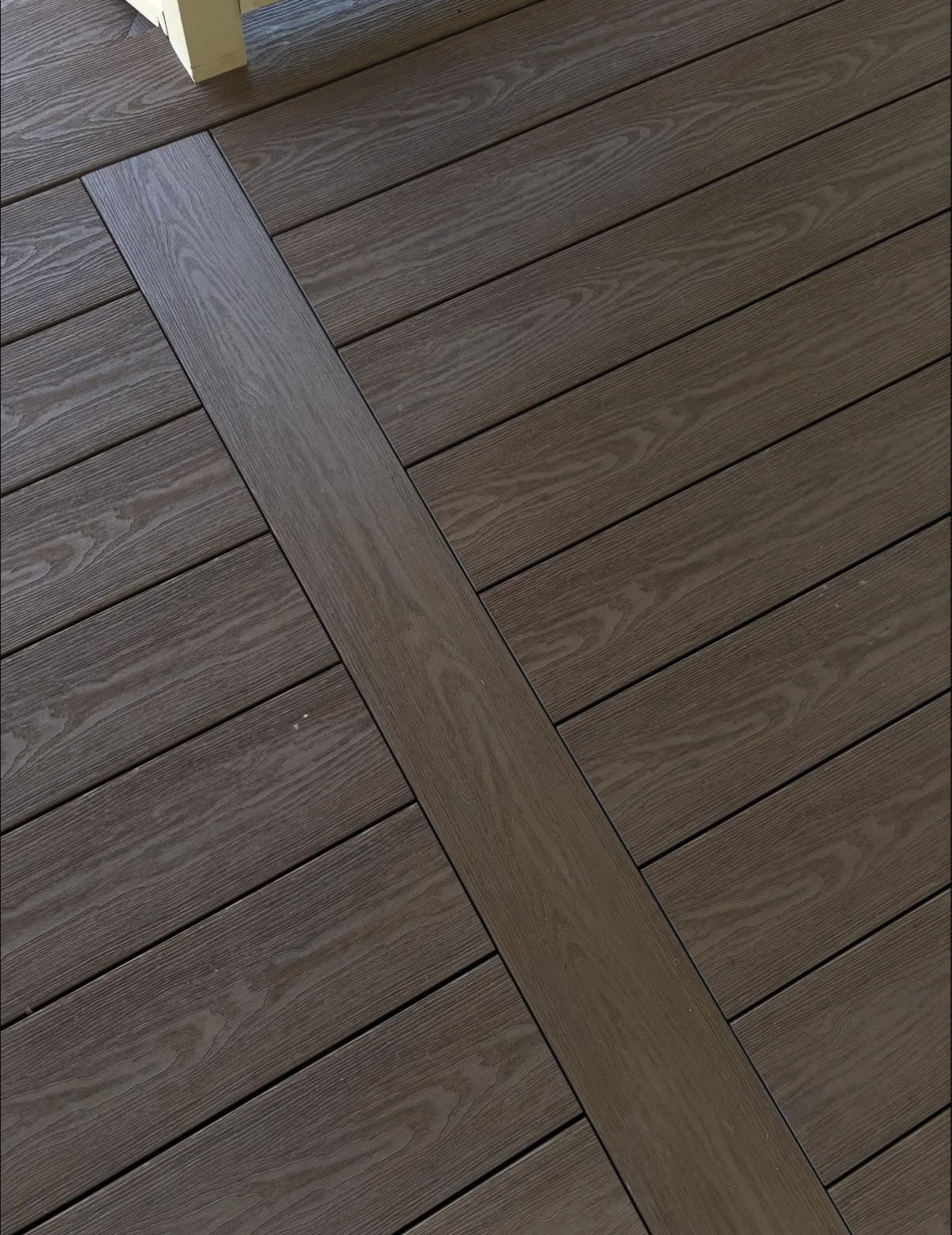
Composite decking can reduce the coating routine associated with timber, but it is not a fit-and-forget surface. We help you compare products, understand their installation requirements and decide whether the trade-offs suit your outdoor space.
01
Product before promise
Compare the actual board system rather than broad low-maintenance claims.
02
Frame and surface together
Match supports, clips and edge details to the chosen manufacturer.
03
Comfort in context
Consider sun, colour and the way the deck will be used underfoot.
Composite decking on the Central Coast often appeals for a straightforward reason: homeowners want to spend less time maintaining a coated timber surface. That can be a sensible priority. It still leaves important questions about heat, stains, board movement and the frame needed to support the product properly.
We approach composite as a complete installation system, not a board that can be swapped into any timber deck detail. Fine Design Co works with all decking materials, with Elliot helping clients compare design and budget choices. We start with the conditions at your home and the particular product requirements, rather than a blanket claim that manufactured boards are better.
What do you gain, and what do you give up?
Composite boards generally combine timber-derived material and polymers, although formulations vary. Their appeal includes a more consistent appearance and, for many products, no routine oiling. They do not reproduce every characteristic of natural timber, and they still need cleaning. Product construction, surface finish and installation instructions can differ substantially between ranges.
| Consideration | Composite | Hardwood |
|---|---|---|
| Appearance | More controlled colour and grain pattern, depending on the range. | Natural grain, variation and a surface that changes with exposure. |
| Routine care | Cleaning remains necessary; many products do not need oiling. | Cleaning and a suitable coating programme if retained colour is wanted. |
| Heat | Can become uncomfortable in strong sun; colour and product matter. | Can also heat up; species, colour and finish influence comfort. |
| Movement | Expansion and contraction must be allowed for under product instructions. | Moisture-related movement and species-specific detailing need consideration. |
| Surface renewal | Sanding or refinishing may be restricted or unsuitable. | Some surfaces can be refreshed, depending on condition and coating. |
| Installation | Product-specific support, clips, gaps and edges are essential. | Species, dimensions and fixing method guide the installation. |
Our hardwood and composite comparison explores the decision in more detail. If natural variation and the ability to rework the surface are priorities, do not discount timber decking simply because it asks for a different care routine. The better choice is the one that suits your expectations after installation, not only on the day it is finished.
Capped and uncapped boards are not the same
A protective outer layer changes the product
Capped composite has an outer layer intended to provide additional surface protection. How far that cap wraps around the board and what it protects against vary by product. The presence of a cap is not a guarantee against every stain, scratch or change in colour. Ask about the actual range rather than relying on the word capped as a complete specification.
Uncapped products need their own assessment
Uncapped composite has a different surface construction and may behave differently when exposed to stains and weathering. It should be assessed against the supplier’s published guidance and your intended use. A lower purchase cost may be attractive, but it needs weighing against appearance, cleaning expectations and any restrictions that matter around outdoor cooking or garden debris.
Solid, hollow and differently profiled boards may also be offered. Those details affect edges, fixing and the way cut ends are finished. A display sample does not show how a full deck will handle joins, corners or stair nosings. We consider those junctions before a range is chosen, especially where the deck is visible from below or from the garden.
Heat: make the sun part of your selection
Composite can become hot in direct sun, particularly in darker colours. Timber and other outdoor surfaces also heat up, so the useful question is how the proposed product behaves in your actual setting. A small sample viewed indoors cannot tell you what a broad exposed deck will feel like during a summer afternoon.
We discuss when the space will be used, whether people are likely to walk barefoot and how much shade exists through the day. Light colours may be worth comparing, but they are not a promise of a cool surface. Reflected heat and glare from adjacent glazing can also be relevant and should be checked against the product guidance.
- View samples outside in the light and exposure closest to the proposed deck.
- Consider afternoon use as well as morning appearance.
- Discuss shade as part of the layout rather than an afterthought.
- Check manufacturer guidance about reflected heat, mats and objects placed on the surface.
The frame must suit the selected board
Timber framing can work, with suitable detailing
A timber substructure may be appropriate when its structural design, treatment, ventilation and drainage suit the site and board system. Composite boards do not protect a damp frame from decay. Water needs a way out, and the space below should not become a closed pocket of wet ground and leaf litter. Protective details must follow the relevant guidance without creating new moisture traps.
Steel or aluminium brings different connections
Steel or aluminium framing may be considered where the site, proportions or desired system make it useful. These are not interchangeable upgrades: corrosion protection, fastener compatibility, connections and thermal movement need attention. A clip designed for one substrate should not be assumed suitable for another. Near salt air, exposed metal components deserve careful specification as a complete assembly.
Joist spacing is manufacturer-specific and may also depend on the board profile, orientation and intended use. Angled layouts and stairs can introduce different support requirements. Changing the surface after a frame has been designed may require additional framing, so settle the product early enough to coordinate the structure rather than forcing it to fit later.
Movement, clips and a deliberate edge detail
Expansion gaps are functional, not unfinished work
Composite expands and contracts as temperatures change. End gaps, clearances at walls and fixing arrangements need to allow for that movement. The required detailing can depend on board length and installation conditions as well as the product itself. Closing gaps for a tighter-looking finish can lead to problems later; the manufacturer’s system takes priority over a preferred visual effect.
Hidden clips still need the right installation
Clip systems can give the walking surface a clean appearance, but they are not all alike. Starter pieces, locking points, screws and end details need to work together. Some locations require a different fastening method, and access for replacing a board is worth understanding. We do not mix components simply because they appear to fit the same groove.
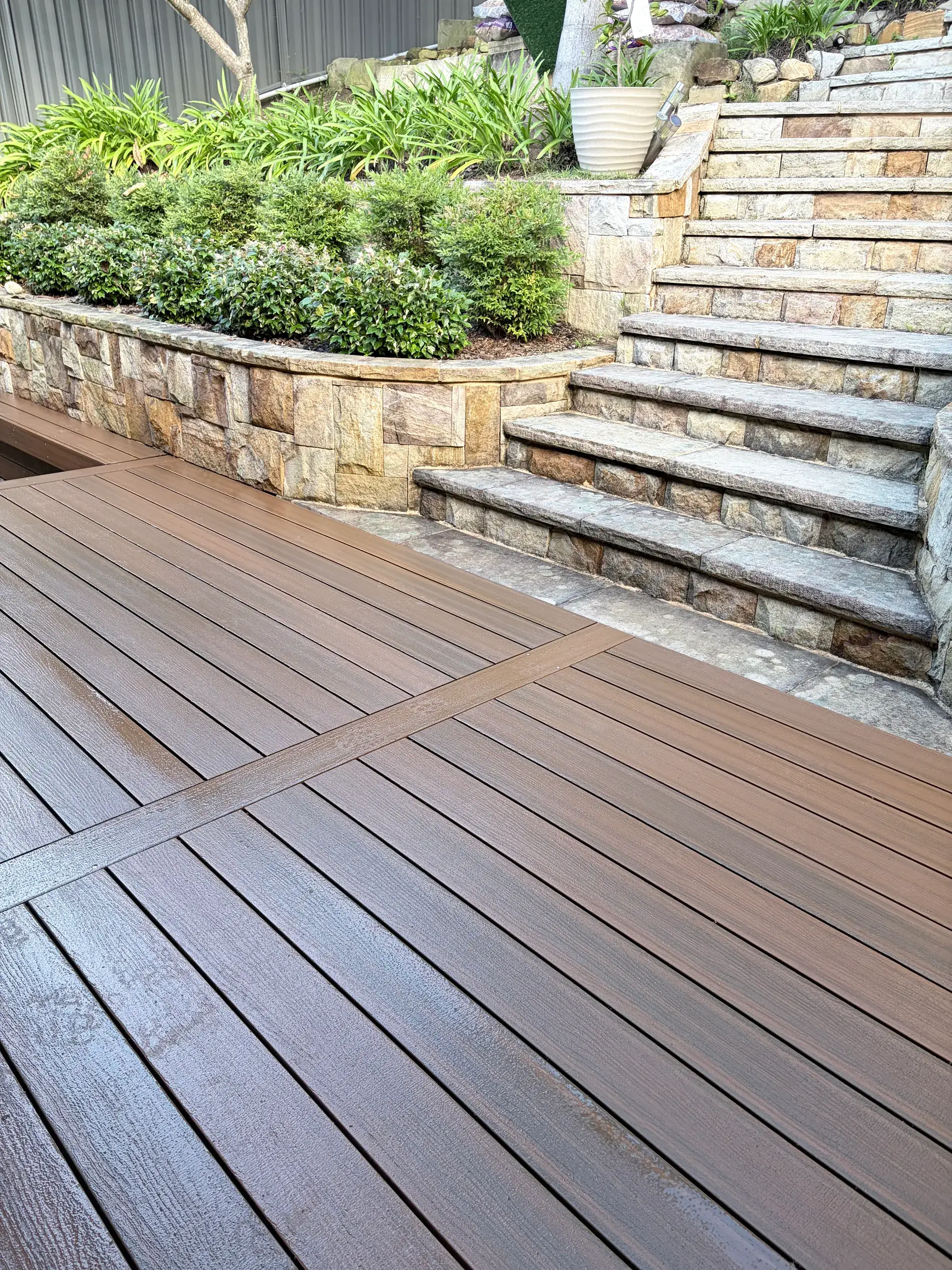
Picture-frame borders need support underneath
A border can finish the deck neatly and help organise the visual direction of the boards. It also introduces extra joins, corners and support requirements. The frame needs to be planned for those edges so the border is not merely an attractive trim fixed wherever it can catch a joist. Stair transitions need the same attention to support and permitted overhangs.
Less coating does not mean no maintenance
Composite still collects dirt, leaves and food spills. Shaded areas can stay damp, and organic material can encourage surface growth. Regular cleaning and keeping drainage gaps clear are part of ownership. Use products and equipment permitted by the manufacturer; aggressive pressure washing or an unsuitable chemical can damage a surface rather than restore it.
Dragging heavy furniture, placing hot objects on boards or leaving unsuitable mats in place can create problems that an oiling-free promise does not address. Surface repair may also be less flexible than with timber. Before choosing a product, understand what can realistically be cleaned, what may remain visible and how an individual damaged board could be replaced.
Compare the installed scope, not just board cost
Composite and hardwood costs depend on the actual products and the complete build. Board lengths, waste, clips, extra supports, borders, stairs and finishing pieces can all change the installed scope. Timber may involve preparation and coating work, while composite can involve more product-specific components. Neither material is automatically cheaper across every project.
Over time, maintenance preferences matter, but future savings should not be promised without a defined comparison. Cleaning remains necessary for both surfaces, and coating choices influence timber upkeep. Our deck cost guide explains why area alone is not enough to set a reliable budget.
For a new structure, explore our deck construction service. If you want to keep an existing frame, start with deck replacement planning: its condition and support layout must suit the proposed boards. We would rather resolve that question early than hide an unsuitable substructure under a new surface.
Work and details
Questions
Frequently asked questions
Is composite decking maintenance-free?
No. Many composite products avoid routine oiling, but they still need cleaning and clear drainage gaps. Care instructions vary, and unsuitable chemicals or cleaning methods may damage the surface.
Does composite get too hot to walk on?
It can become uncomfortable in full sun, particularly in darker colours. Product, exposure and surrounding conditions all matter, and other decking surfaces can also become hot. Compare samples outdoors and consider shade rather than relying on an indoor display.
Can composite boards go on my existing timber frame?
Possibly, but the frame needs an assessment of its condition, structure and support layout. The selected composite may require different support spacing or additional framing at joins and borders. Reusing the frame should be a checked decision, not an automatic cost-saving assumption.
Do all composite boards use hidden clips?
No. Fixing methods depend on the product and location, and some edges or details may need a different approach. The clips, screws and substrate must form a compatible system installed to the current instructions.
Is composite cheaper than hardwood?
There is no universal answer. Compare the complete installation, including frame changes, fasteners, borders, stairs and any coating work. Ongoing care is also worth considering, but we do not promise a particular financial saving without a defined project comparison.
Does composite come with a warranty?
Warranty terms depend on the manufacturer and exact product. Installation, maintenance and exposure conditions can affect eligibility and exclusions. Fine Design Co must confirm the relevant current documentation rather than promise a blanket warranty for all composite decking.
Related services
Request a quote
Planning a deck, pergola or outdoor living space?
Tell us a little about your home and what you have in mind. Elliot will be in touch to arrange an on-site visit and talk through materials, design and budget.