
Grain worth considering
Timber Decking on the Central Coast
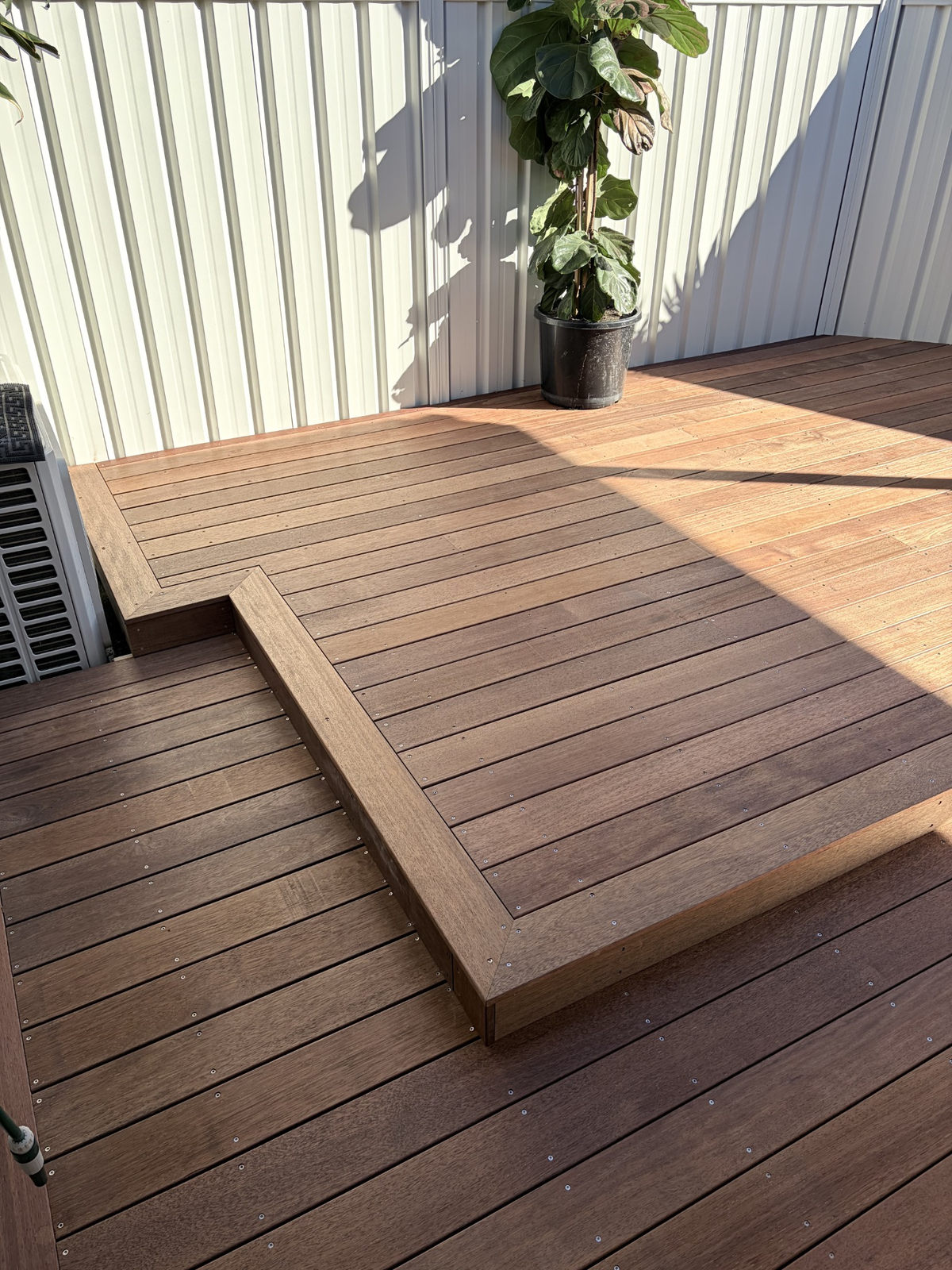
Timber brings natural variation underfoot, from the colour of a new board to the way it weathers over time. We help you choose a timber deck by balancing appearance, exposure, maintenance and the structure beneath it.
01
Species with purpose
Compare hardwoods and treated pine beyond their showroom colour.
02
Coastal detailing
Consider moisture, ventilation and corrosion-resistant fixings together.
03
An honest care plan
Understand weathering and coating before committing to a finish.
Choosing timber decking on the Central Coast is partly about colour, but colour is only the beginning. Sun, rain, salt air and the way a deck dries all influence how it performs. We look at the board, the fixing method and the conditions underneath as one system, rather than expecting an expensive hardwood to compensate for poor detailing.
For some homes, the appeal is the changing grain and natural variation. For others, it is the ability to refresh a worn finish over time. Fine Design Co builds timber decks with those priorities in mind, with Elliot helping you work through design, budget and the practical care that follows construction.
Five timber options, with different compromises
Spotted gum: variation is part of the appeal
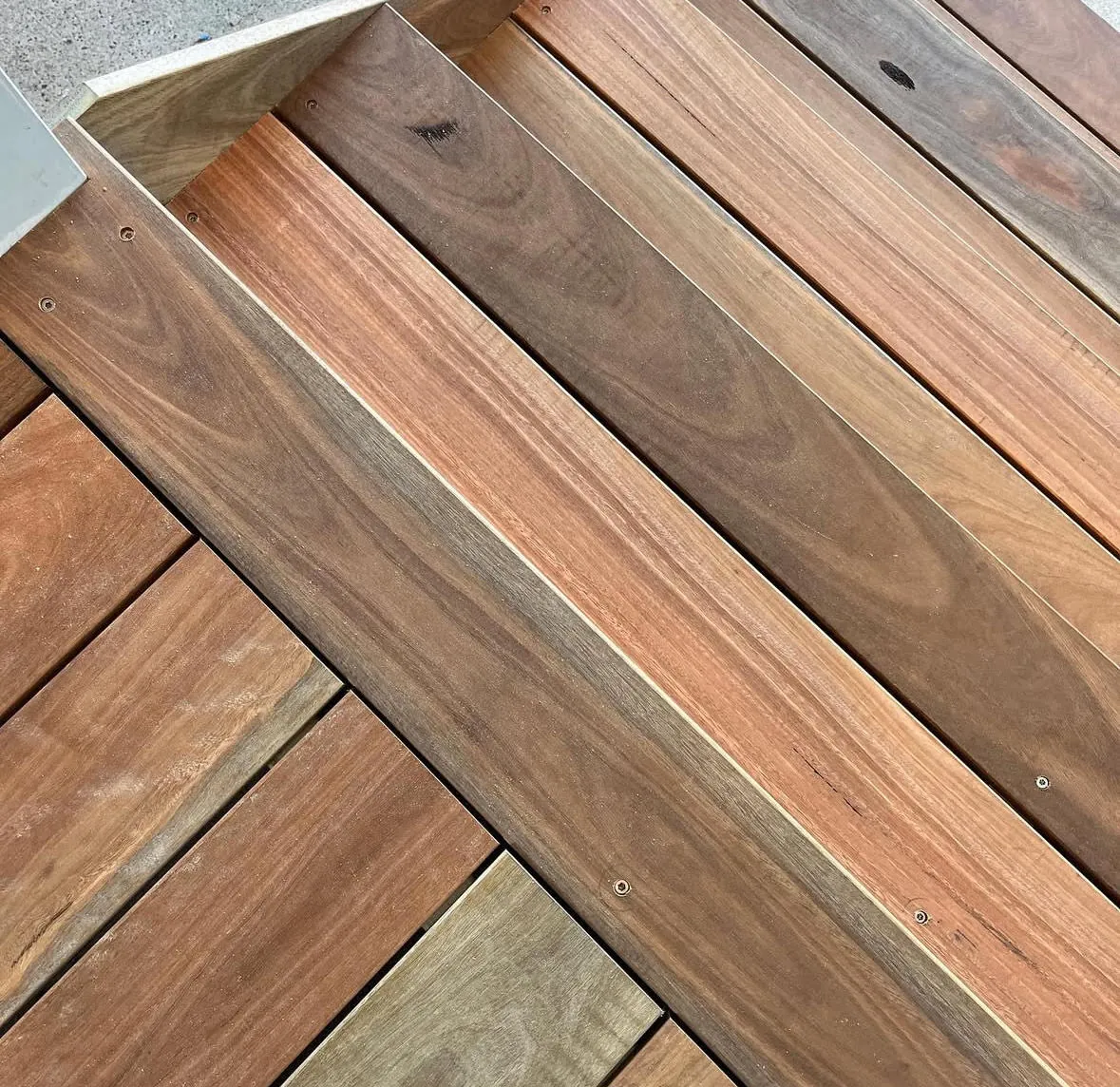
Spotted gum can show a broad mix of browns and grain patterns. A sample board gives a sense of the material, not a promise that every board will match it. When considering spotted gum decking on the Central Coast, we discuss whether that variation suits the house and whether you prefer a maintained colour or a gradually weathered surface.
As a dense hardwood, it needs appropriate preparation and fixing. We also check the actual supply, grade and profile rather than assuming every product sold under a species name is identical. Compare its appearance and care requirements with another familiar option in our spotted gum versus merbau guide.
Blackbutt: a lighter natural palette
Blackbutt often appeals where a lighter timber palette is wanted. Grain and colour still vary, and coatings can deepen the initial appearance. Ask to see a coated sample as well as bare timber if the finish colour is important. A pale starting colour does not mean the deck will stay pale without maintenance or feel cool in every sun condition.
Merbau: rich colour with runoff to manage
Merbau is commonly chosen for its warm, deeper colouring. It can bleed tannins, especially when new, and that runoff can stain nearby concrete, render and other pale surfaces. Merbau decking on the Central Coast therefore needs careful thought around pools, walls, paths and lower terraces, not just a decision about board colour.
Cleaning, preparation and coating should follow the product guidance for the timber and finish. We do not treat a quick rinse as a guarantee against staining. Drainage routes, protection of nearby finishes and the sequence of surrounding work can all help manage the risk, but the potential for tannin bleed should be understood before material selection.
Ironbark: dense hardwood with a strong visual presence
Ironbark may suit a project seeking a robust hardwood appearance with distinct grain and colour variation. Availability and the specific timber supplied need checking, particularly when trying to match existing work. Its density also reinforces the importance of suitable tools, pre-drilling where required and correctly specified fixings rather than forcing a generic installation method onto the boards.
Treated pine: separate the boards from the posts
Treated pine can suit a different budget or finish preference, but treatment class and application need to match. H3 treatment is for above-ground exposure; H4 is used for in-ground applications such as suitable posts. These are different parts of the deck doing different jobs. A decking board is not made suitable for ground contact simply because it is described as treated.
For treated pine decking on the Central Coast, consider the finished appearance, coating system and the potential for dents or movement as well as the purchase cost. Treatment does not remove the need for drainage, ventilation or termite management. Fixings and metal connectors must also be compatible with the treatment system used.
| Timber | Appearance to expect | Main question before choosing |
|---|---|---|
| Spotted gum | Variable brown tones and prominent natural grain. | Do you welcome variation across the whole deck? |
| Blackbutt | Often a lighter palette, affected by coating and weathering. | Have you seen the proposed finish on a sample? |
| Merbau | Warm, deeper colour with natural variation. | Where could tannin-rich runoff stain surrounding finishes? |
| Ironbark | Dense hardwood with variable grain and colour. | Is the required grade and profile available? |
| Treated pine | A different grain and finish character from hardwood. | Are treatment, application and coating correctly matched? |
Board shape, width and grade affect the result
Width is a design decision and an installation decision
Wider boards can create a broader visual rhythm; narrower boards create more lines and fixings across the deck. Width, thickness and profile also influence movement, support and installation requirements. Board length affects joins and waste, particularly around angled edges or picture-frame borders. We set out the boards with the footprint rather than ordering solely from a square-metre calculation.
A grooved face is not an automatic guarantee of slip resistance. Wet leaves, algae, coating choice and cleaning all affect the surface underfoot. Profiles should be installed according to supplier guidance, not flipped simply because one side looks more familiar. End joints and board edges need support and detailing suited to the selected product.
Grades describe character, not a perfectly uniform colour
Timber grades can permit different levels of natural features such as gum veins and knots. The relevant grading description needs checking with the supplier; terms should not be assumed identical across every product. A clearer-looking grade does not turn natural timber into a uniform manufactured surface. If appearance is critical, discuss the acceptable range before ordering.
Coatings, colour change and everyday care
Unprotected timber exposed outdoors changes colour over time, often moving towards grey. The pattern depends on sun, rain and shelter, so boards under furniture or eaves may age differently from exposed areas. Weathering is not the same as decay, but a grey appearance does not prove the timber beneath is sound either. Inspection and cleaning remain important whichever appearance you prefer.
Oils and other decking coatings vary in how they colour, protect and wear. Preparation, moisture condition and compatibility with previous products matter. Adding a new coat over contamination or a failing finish is unlikely to give a good result. We discuss the selected system rather than promising a universal recoating interval for every species and exposure.
- Clear debris from gaps and the areas where boards meet walls.
- Keep an eye on shaded areas that remain damp after the rest of the deck dries.
- Use cleaning products and methods compatible with the timber and coating.
- Inspect fixings, board ends and stair edges as well as the main walking surface.
- Recoat according to the condition of the finish and product guidance, not only the calendar.
Our coastal hardwood maintenance guide expands on that care routine. Let us know if regular coating is unlikely to suit your household. A material choice should fit the way you live, rather than depend on a maintenance programme you already know you will avoid.
Fixings matter as much as the board face
Face screws or concealed systems
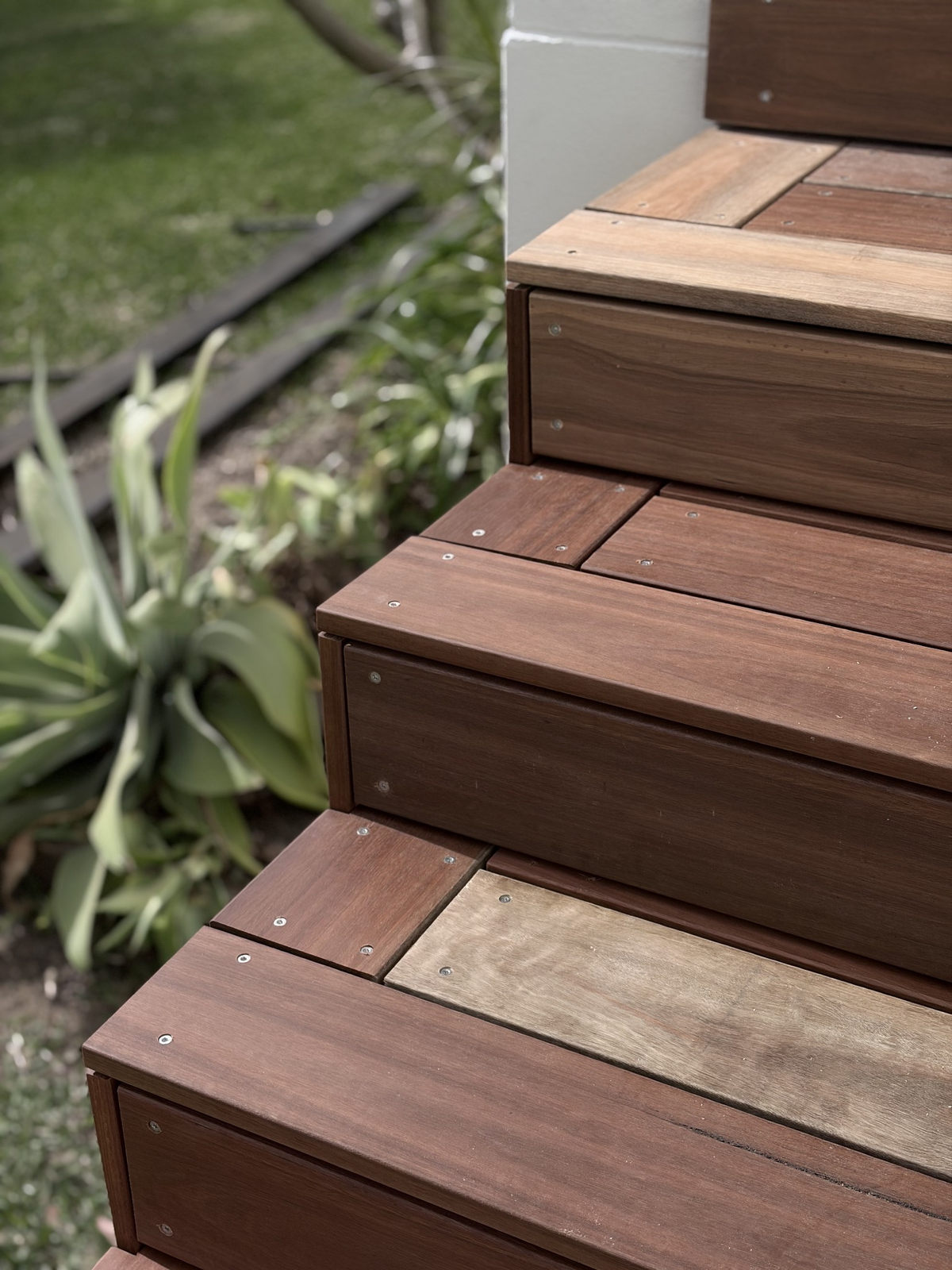
Visible screws can form a deliberate, orderly detail and may make individual boards easier to access later. Concealed systems offer a different appearance but must be suitable for the actual timber, profile and exposure. Not every hardwood board is compatible with every hidden fixing system, and the fixing method must still manage movement and secure board ends properly.
Near the coast, 316 marine-grade stainless steel fixings are generally recommended for corrosion resistance. That does not mean choosing a screw by its label alone: size, embedment, substrate and compatibility with connectors and treatment still matter. Dissimilar metals and trapped salt-laden moisture can create problems even when the visible screw head looks sound.
Bushfire, termites and the space underneath
AS 3959 governs construction in bushfire-prone areas, with the assessed BAL affecting what can be used and how it is detailed. A species being durable outdoors does not automatically make it suitable for every bushfire condition. Board dimensions, gaps, subfloor treatment and the surrounding construction may also matter; species selection is only part of the answer.
Timber treatment or natural durability is not a substitute for maintaining the property’s termite-management arrangements. Deck construction should not conceal inspection zones or create unchecked routes into the house. Low decks also need particular attention to drainage and ventilation, because damp ground and trapped leaf litter can undermine otherwise sensible material choices.
Choose the whole deck, not just a species
There is no single best decking timber for coastal homes. The right choice balances exposure, the look you want, available products, maintenance and budget. If you are still weighing natural timber against a manufactured board, our timber and composite comparison sets out the compromises rather than declaring one material a universal winner.
For a new structure, our deck building service explains how layout, footings and framing fit together. If existing boards or the frame are deteriorating, consider deck replacement before committing to a surface-only upgrade. We can work through the options with Elliot and identify what needs confirming before a material order is made.
Work and details
Questions
Frequently asked questions
Which hardwood is best for a coastal deck?
There is no universal winner. Exposure, desired colour, maintenance, available grades and the site’s bushfire requirements all affect the choice. The framing, drainage and fixing specification are just as important as the species.
Will spotted gum boards all be the same colour?
No. Natural variation is part of spotted gum’s appearance, and one sample cannot represent every board in an order. Coating and weathering also change the overall colour over time.
Can merbau stain nearby paving?
Yes. Tannins can wash out of merbau and stain concrete, render or other nearby finishes. The runoff route, preparation and protection of adjoining surfaces need consideration before installation.
Does hardwood need oiling?
That depends on the appearance you want and the selected coating system. Keeping a richer timber colour generally requires ongoing cleaning and maintenance, while exposed timber left to weather changes colour. We should confirm care requirements for the actual product and conditions rather than use a fixed universal interval.
Are hidden fixings suitable for all timber decking?
No. Suitability depends on the timber product, board profile and the fixing system. The complete installation needs to follow the relevant requirements, including support and treatment of board ends.
Can treated pine posts go into the ground?
The treatment class must suit the application. H4 is used for suitable in-ground posts, while H3 is intended for above-ground exposure. Structural grade, footing details and the complete installation still need confirmation.
Related services
Request a quote
Planning a deck, pergola or outdoor living space?
Tell us a little about your home and what you have in mind. Elliot will be in touch to arrange an on-site visit and talk through materials, design and budget.